
Ireland Minimum Wage 2027: €14.94 an Hour From 1 January


The Ireland minimum wage 2027 rate will be €14.94 an hour from 1 January 2027, after the Irish Government confirmed a 79-cent increase in Budget 2027 on Tuesday 6 October 2026. For non-EU students working part-time on a Stamp 2 permission, that means up to €298.80 a week before tax in term time, based on the 20-hour weekly limit.
Table of Contents
Key facts
- New national minimum wage: €14.94 an hour from 1 January 2027, up 79 cents.
- Announced: Budget 2027, Tuesday 6 October 2026.
- Stamp 2 students can work up to 20 hours a week in term and up to 40 hours a week in holidays.
- Standard holiday periods for Stamp 2 work: June to September, and 15 December to 15 January.
- The 2% USC band ceiling rises by €1,600 to €30,300 from 1 January 2027, in line with the wage rise.
What changed
Citizens Information, the Irish state information service, summarised the Budget 2027 measures on 6 October 2026. It states that the national minimum wage “will increase by 79 cents to €14.94 per hour” from 1 January 2027.
A 79-cent rise to €14.94 puts the current 2026 rate at €14.15 an hour. If you are paid the minimum wage, the Ireland minimum wage 2027 rate is the figure to check on your payslip from January.
Other Budget 2027 measures that may matter to students who work and pay tax:
- The personal, employee and earned income tax credits each rise by €125 to €2,125.
- The standard rate income tax band for a single person rises by €2,500 to €46,500.
- The Rent Tax Credit rises by €150 to €1,150 for an individual.
- The ceiling of the 2% Universal Social Charge band rises to €30,300, to match the higher minimum wage.
Budget 2027 also cuts the student contribution fee by €150 to €2,350 a year, but that fee is for students who qualify for free fees in Ireland, usually EU students. Non-EU students pay separate international fees set by their college.
Who is affected
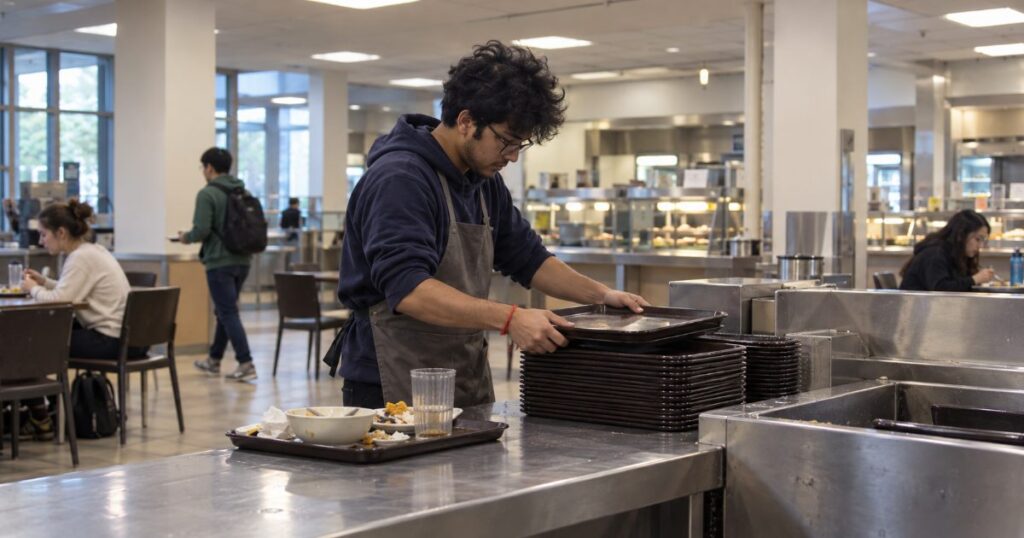
- Non-EU students in Ireland on Stamp 2 who work part-time in shops, cafes, warehouses, cleaning and care support.
- Graduates on the Third Level Graduate Programme (Stamp 1G) who work in entry-level jobs.
- Employers who pay staff at or near the minimum wage.
Students on Stamp 2A cannot work, so the change does not affect them.
What the Ireland minimum wage 2027 rate means for Nepali and Indian students
If you plan to work part-time alongside your course in Ireland, the new rate changes the numbers, although part-time pay should not be counted on to cover full living costs.
At €14.94 an hour:
- 20 hours a week in term time is €298.80 a week before tax.
- 40 hours a week in the June to September holidays is €597.60 a week before tax.
These are gross figures. Your take-home pay will depend on income tax, USC and PRSI. Do not plan your visa budget around future part-time earnings.
You can plan total study costs in Nepali rupees with the student visa money calculator.
What to do now
- Check your payslips from January 2027. Your hourly rate should be at least €14.94 if you are paid the minimum wage.
- Keep to the limit of 20 hours a week in term time. The higher wage does not change the hours limit.
- Plan holiday work for June to September and 15 December to 15 January, when you can work up to 40 hours a week.
- Check your tax credits for 2027, as the personal and employee credits rise to €2,125 each.
- If you pay rent and income tax, check whether you can claim the Rent Tax Credit.
What we don’t know yet
- Budget 2027 did not announce any change to student work hours, Stamp 2 rules or employment permit thresholds. We have found no official announcement on these.
- Youth and trainee minimum rates for 2027 were not set out in the summary we checked.
Frequently asked questions
What is the Ireland minimum wage 2027 rate?
€14.94 an hour from 1 January 2027, a rise of 79 cents, as confirmed in Budget 2027.
How many hours can international students work in Ireland?
Students on Stamp 2 can work up to 20 hours a week in term and up to 40 hours a week in the set holiday periods.
Does the student contribution cut apply to Nepali students?
Usually no. The €150 cut applies to the student contribution charged to students who qualify for free fees, not to non-EU international tuition.
Your next step
Sources
- Budget 2027 – Citizens Information
- Immigration rules for full-time non-EEA students – Citizens Information
- Budget 2027: Student contribution fees to be cut permanently – Irish Examiner
Last checked: 7 October 2026. This is general information, not immigration advice.
Responses