
Canada Study Permit Cap 2026: Numbers, PAL Rules and Your Real Chances

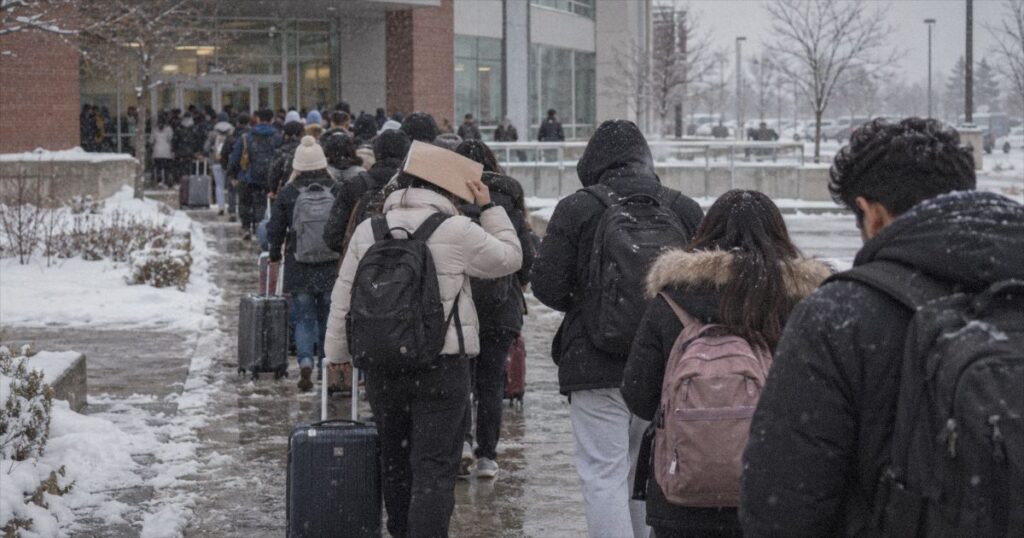
Canada’s study permit cap 2026 is smaller than most students realise. IRCC plans to issue 408,000 study permits this year, but only 155,000 are for new students. The rest are extensions for people already studying. Here is what the cap means if you are applying from India or Nepal.
Table of Contents
Last checked: 29 September 2026. Figures come from IRCC, Statistics Canada and The PIE News. IRCC will publish the 2027-2029 Immigration Levels Plan by 1 November 2026, which may change these numbers. This is general information, not immigration advice.
Study permit cap 2026: how many permits Canada will issue
- 408,000 study permits in total in 2026.
- 155,000 for new arrivals.
- 253,000 for extensions by current or returning students.
- Of the permits issued, 180,000 require a provincial or territorial attestation letter (PAL/TAL). The PAL/TAL application spaces handed to provinces total 309,670.
The Immigration Levels Plan 2026-2028 sets new student arrivals at 155,000 in 2026 and 150,000 in both 2027 and 2028. The government has also committed to reducing temporary residents to less than 5% of the population by the end of 2027. On 1 July 2026, they were still 6.7% (Statistics Canada).
Province-by-province allocations
| Province | PAL/TAL application spaces | Target permits issued |
|---|---|---|
| Ontario | 104,780 | 70,074 |
| Quebec | 93,069 | 39,474 |
| British Columbia | 32,596 | 24,786 |
| Alberta | 32,271 | 21,582 |
| Saskatchewan | 11,349 | 5,436 |
| Manitoba | 11,196 | 6,534 |
| Nova Scotia | 8,480 | 4,680 |
| New Brunswick | 8,004 | 3,726 |
| Newfoundland and Labrador | 5,507 | 2,358 |
| Prince Edward Island | 1,376 | 774 |
Under the study permit cap 2026 allocations, application spaces are higher than target permits because IRCC expects many applications to be refused.
Who needs a PAL or TAL, and who does not
Most new study permit applicants need a PAL or TAL from their province. In 2026, master’s and doctoral students at public institutions are exempt, along with K-12 students and some other groups. Your school usually requests the letter for you. See our study in Canada guide for the full process.
How much money you must show
From 1 September 2026, applicants outside Quebec must show these living-cost amounts, on top of first-year tuition and travel:
| Family size | Amount (CAD) |
|---|---|
| 1 person | $23,448 |
| 2 people | $29,192 |
| 3 people | $35,888 |
| 4 people | $43,572 |
| Each additional person | $6,318 |
Quebec sets its own amount. See the proof of funds news update.
Why so many Indian and Nepali applications are refused
An analysis of IRCC data by BorderPass and ApplyBoard, reported by The PIE News, found:
- About 73,800 new study permits were approved in 2025, roughly 25% of the target.
- The overall approval rate was about 36% in 2025.
- India’s approval rate fell from 69% in 2024 to about 25-27% in 2025: about 33% for university applicants and 14% for college applicants.
These are third-party estimates, not official IRCC rates. We could not find a reliable Nepal-specific approval rate. Study permit holders in Canada fell by 140,827 between July 2025 and July 2026, according to Global News reporting Statistics Canada data.
Processing times and fees
- IRCC’s posted processing time for a study permit from outside Canada was 5 weeks for India and 5 weeks for Nepal (updated 22 September 2026).
- Study permit fee: $150. Biometrics: $85.
How to improve your chances under the study permit cap 2026
- Choose a program that clearly builds on your studies or work. See our letter of explanation guide.
- Show funds with a clear source, held over time.
- Consider graduate programs at public institutions, which are exempt from the PAL requirement.
- If refused, read the reasons carefully before reapplying. See student visa refused: what next.
Frequently asked questions
Is there a study permit cap in 2026? Yes. IRCC plans to issue 408,000 study permits in 2026: 155,000 for new arrivals and 253,000 extensions.
Do master’s students need a PAL in 2026? No. Master’s and doctoral students at public institutions are exempt from the PAL/TAL requirement in 2026.
How much bank balance is needed for a Canada study permit in 2026? From 1 September 2026, a single applicant outside Quebec must show $23,448 for living costs, plus first-year tuition and travel.
Your next step
Responses